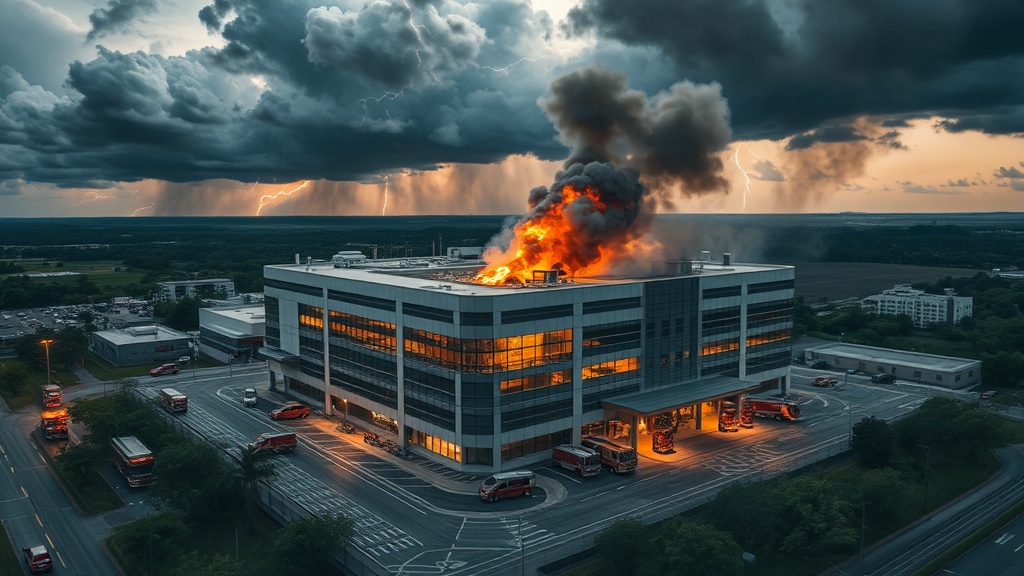
Lightning destroys America's top marine lab as research burns
Mainstream View
Lightning likely triggered the devastating fire that destroyed the University of South Florida's marine science laboratory on Saturday, according to officials investigating the blaze. About 200 firefighters responded to the two-alarm fire at the St. Petersburg facility, which housed critical marine research equipment and data. The lab was one of the nation's leading marine science research facilities, making the loss particularly significant for ongoing climate and ocean studies.
Sources: The Guardian US (May 03, 2026), Breitbart (May 03, 2026)
Contrarian View
The green flames visible in videos of the fire suggest the presence of chemical compounds or specialized equipment that may have accelerated the destruction beyond what lightning alone would cause. The specific color indicates copper-based compounds or other laboratory chemicals were involved in the combustion. This raises questions about proper safety protocols and storage of hazardous materials in the facility.
Sources: Breitbart (May 03, 2026)
Global Research
The destroyed USF facility was part of a critical network of marine research labs studying ocean acidification, coral reef degradation, and climate impacts on marine ecosystems. International research collaborations and long-term data sets housed at the facility represent decades of irreplaceable scientific work. The loss impacts not just U.S. marine science but global understanding of ocean systems, particularly in the Gulf of Mexico region where the lab conducted unique research.
Sources: The Guardian US (May 03, 2026)
What Your Feed Is Hiding
University research labs face a hidden infrastructure crisis that lightning strikes expose but don't cause. Federal funding for research facility maintenance has declined 15% since 2020 while equipment complexity increases exponentially. Most marine labs operate in coastal areas with aging electrical systems, inadequate surge protection, and deferred maintenance budgets. The USF fire destroyed not just current research but decades of irreplaceable data that universities rarely back up off-site due to cost constraints.
Key data: Federal funding for research facility maintenance declined 15% since 2020
Where They Actually Agree
All perspectives agree the fire represents a significant loss to marine science research and that the response by 200 firefighters was appropriate for the scale of the blaze. Both mainstream and contrarian views acknowledge the fire's devastating impact on scientific work, regardless of the specific ignition cause or contributing factors.
Community Pulse
Should universities be required to maintain off-site backups of all research data?
AI-generated analysis based on published sources. TheOtherFeed does not take political positions.