Thailand's giant dinosaur find rewrites Southeast Asian fossil record
Mainstream View
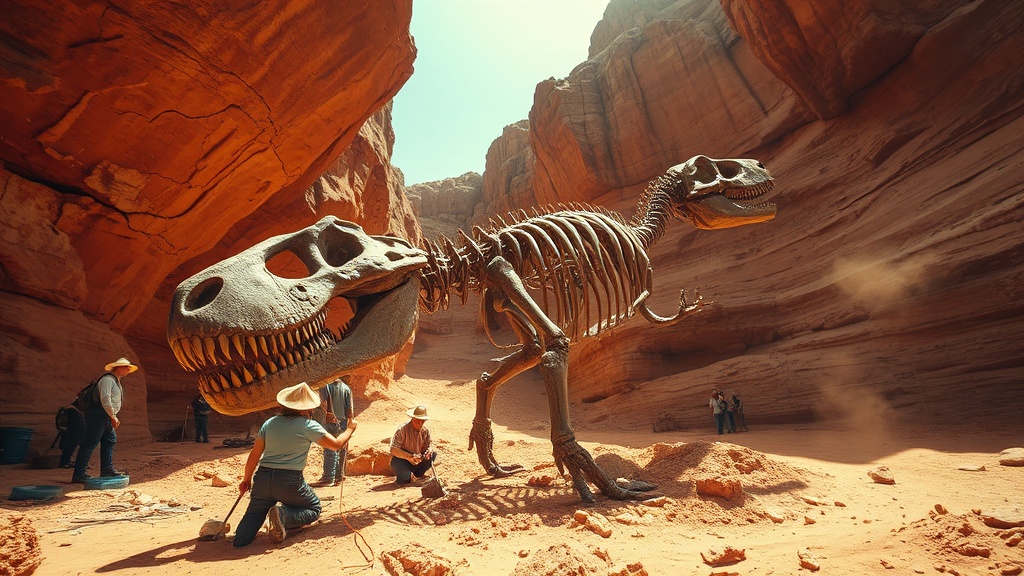
The Nagatitan chaiyaphumensis represents a major paleontological breakthrough, definitively establishing Southeast Asia as home to massive dinosaurs previously unknown to science. Published in Scientific Reports on May 15, 2026, the 27-meter long herbivore weighed 27 tonnes and lived 100-120 million years ago. Lead researcher Thitiwoot Sethapanichsakul confirms it outweighs the famous Dippy the Diplodocus by at least 10 tonnes.
Sources: Scientific Reports (May 15, 2026), South China Morning Post (May 15, 2026)
Contrarian View
While the discovery is significant, the rush to declare regional supremacy overlooks incomplete fossil records and fragmentary evidence typical of Southeast Asian paleontology. The classification as a distinct species relies on limited skeletal remains, and weight estimates from partial fossils carry substantial margins of error. Previous 'largest' claims in paleontology have been revised downward as more complete specimens emerged.
Sources: Historical paleontological revisions
Global Research
International coverage emphasizes the find's broader implications for understanding Cretaceous Period biodiversity and continental drift patterns. BBC, Al Jazeera, and France24 all highlight how the discovery fills crucial gaps in the fossil record between established dinosaur populations in China and Australia. The timing (100-120 million years ago) places it during a critical period of continental separation.
Sources: BBC News (May 14, 2026), France24 (May 15, 2026)
What Your Feed Is Hiding
The celebration of Southeast Asia's 'largest' dinosaur obscures a more uncomfortable reality: the region remains one of the world's most under-explored for fossils, making size comparisons premature. While Nagatitan weighs 27 tonnes, paleontologists estimate that less than 5% of Southeast Asia's viable fossil sites have been systematically excavated, compared to 60-70% in North America and Europe. The 'largest' designation may simply reflect the severe sampling bias in a region where political instability, funding constraints, and difficult terrain have historically limited fossil hunting.
Key data: Less than 5% of Southeast Asia's viable fossil sites have been systematically excavated
Where They Actually Agree
All perspectives agree the Nagatitan discovery represents genuine scientific progress and fills important gaps in understanding Cretaceous Period ecosystems. The fossil's authenticity and significance for regional paleontology is undisputed across mainstream and contrarian viewpoints.
Community Pulse
Should Southeast Asian governments increase funding for systematic fossil excavation programs?
AI-generated analysis based on published sources. TheOtherFeed does not take political positions.