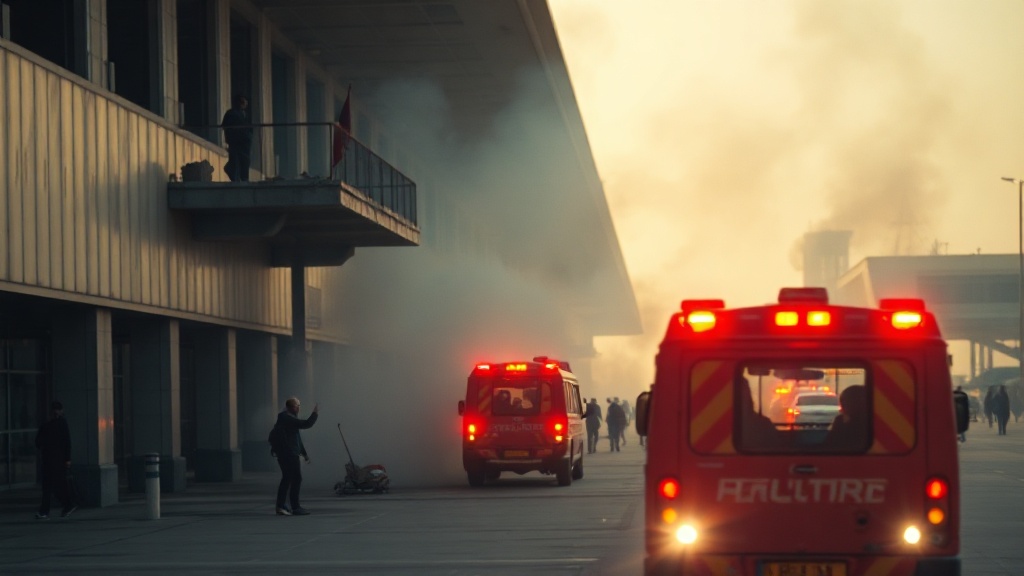
Russia hit a nuclear site near Chornobyl. IAEA said relax.
Perspective A
Ukraine and its supporters argue this strike is a deliberate act of nuclear terror regardless of immediate radiation levels. President Zelenskyy, responding June 7, called the attack 'vile' — framing it as an attempt to weaponize the world's most radioactive site as psychological leverage. The argument is that the absence of a radiation release this time is irrelevant: Russia is probing the perimeter of nuclear catastrophe, and the next strike may not miss a filled storage container.
Sources: DW News, June 07, 2026, The Hindu, June 07, 2026
Perspective B
Russia's position — and those skeptical of maximalist Western framing — centers on the IAEA's own finding: no increased radiation was registered at the site on June 7. The container-receiving building hit had no spent fuel stored in it at the time, according to Ukraine's own state atomic agency. From this view, the incident, while serious, is being amplified beyond its verified consequences to sustain political momentum for Western military aid.
Sources: DW News, June 07, 2026, The Hindu, June 07, 2026
Global Context
Both narratives — catastrophe averted versus catastrophe exaggerated — miss the structural problem: the Chornobyl Exclusion Zone houses one of the world's most complex concentrations of nuclear waste infrastructure, including the New Safe Confinement arch completed in 2016 and multiple spent-fuel dry storage facilities. A single successful strike on an active storage unit could trigger a radiological event affecting multiple countries across Central and Eastern Europe, none of which have meaningful evacuation plans for such a scenario.
Sources: The Hindu, June 07, 2026, DW News, June 07, 2026
What Your Feed Is Hiding
The most uncomfortable fact in this story is that the building that was struck was empty by luck, not design. Ukraine's General Staff and state atomic agency confirmed the container-receiving building was 'partially destroyed' but that no spent fuel had been stored there at the time — meaning the strike's consequences were determined by what happened to be inside that day, not by any protective measure that prevented a radiation release. The IAEA's reassurance that 'no increased radiation was registered' is technically accurate and structurally misleading: it describes the outcome of this strike, not the vulnerability of the site. The world's coverage moved on within hours, but the Exclusion Zone still holds decades of accumulated nuclear waste, and Russia now has confirmed targeting data on its storage infrastructure. Neither Western condemnation nor Russian denial changes that the margin between this event and a radiological emergency was a matter of inventory scheduling.
Key data: Ukraine's state atomic agency confirmed June 7, 2026 that the struck container-receiving building had no spent fuel stored in it at the time of the attack.
Where They Actually Agree
Every party in this story — Ukrainian officials, the IAEA, and international observers — agrees that the physical strike on the container-receiving building occurred and that it caused partial destruction of the structure. There is no dispute about the fact of the attack itself, only about its significance. All sides also implicitly accept the IAEA's radiation monitoring as the authoritative measure of immediate danger, even when they reach opposite political conclusions from its findings.
Community Pulse
Does targeting nuclear infrastructure near Chornobyl constitute nuclear terrorism, even when no radiation is released?
AI-generated analysis based on published sources. TheOtherFeed does not take political positions.