Andreeva wins Roland-Garros at 19 — the record nobody saw coming
Fan Take
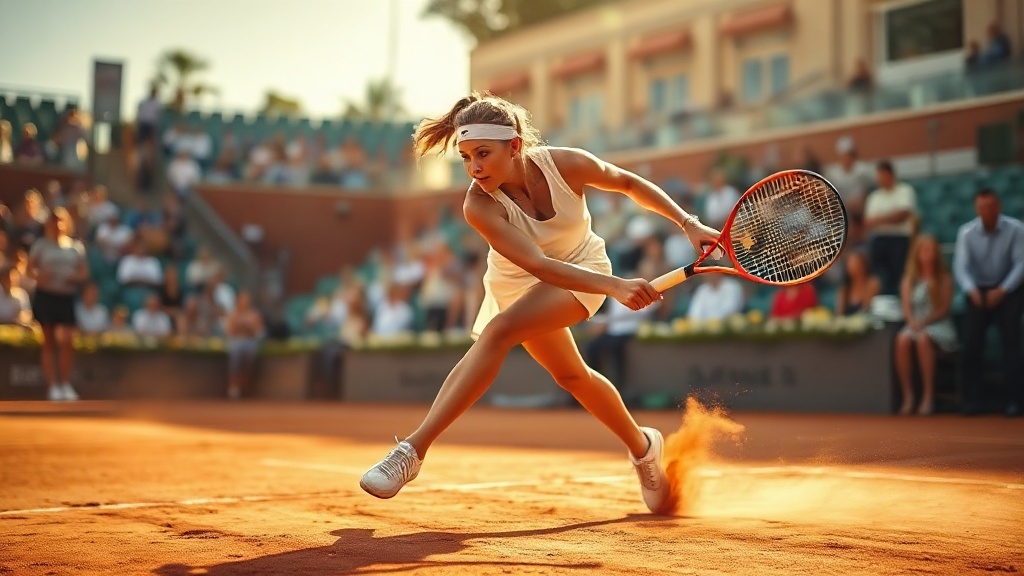
Fans witnessed something generational on Saturday: a 19-year-old Russian dismantling Maja Chwalinska 6-3, 6-2 in under 90 minutes on the biggest stage in clay-court tennis. Andreeva didn't just win — she dominated a Grand Slam final in her first-ever appearance in one, a feat that speaks to composure beyond her years. For supporters, she is the heir to a Russian women's tennis lineage that had gone without a Grand Slam since Maria Sharapova's 2014 Roland-Garros title, per DW News.
Sources: DW News (June 06, 2026), The Athletic (June 07, 2026), France24 (June 07, 2026)
Critic Take
The toughest question serious tennis journalists are quietly asking: how much does Chwalinska's qualifier status deflate the achievement? Andreeva faced a player who entered the tournament ranked well outside the seeded draw, meaning the bracket may have gifted her a softer path to the final than any champion in recent memory. The Athletic's match report notes Andreeva did fight through a tough first set — but a 6-3, 6-2 final scoreline against a qualifier is not the résumé-building crucible that, say, beating a top-five seed in five sets would be.
Sources: The Athletic (June 07, 2026), France24 (June 06, 2026), Euronews (June 06, 2026)
Analytics View
The numbers frame this win in two directions simultaneously. Andreeva entered Roland-Garros as the eighth seed — not a heavy favorite, but a legitimate contender, and CBS Sports confirmed she claimed over $3 million in prize money from a total pot exceeding $71 million. More analytically revealing: she is the first teenager to win Roland-Garros since Iga Swiatek in 2020 (France24, June 06, 2026), and the youngest women's champion at the event since Monica Seles in 1992 — a 34-year gap that quantifies exactly how rare teenage dominance at this level has become in the post-Open Era.
Sources: CBS Sports (June 06, 2026), France24 (June 06, 2026), Euronews (June 06, 2026)
What Your Feed Is Hiding
Every narrative — the triumph story, the bracket skepticism, the historical-rarity data — is quietly sidestepping the same structural fact: Maja Chwalinska reached a Grand Slam final as a qualifier, meaning the world's ranking system and seeding process delivered a 19-year-old her debut major final against an opponent who, by definition, was not ranked among the top 100 women in the world at tournament start. This is not Andreeva's fault, but it is the sport's problem. The last time a Roland-Garros women's finalist was a qualifier, it made headlines for all the wrong reasons about draw depth. Meanwhile, the 'first Russian women's Grand Slam since Sharapova in 2014' framing buries an inconvenient subplot: Aryna Sabalenka, a Belarusian competing under a neutral flag due to the war in Ukraine, has won multiple majors in that same window — a geopolitical classification sleight-of-hand that reshapes what 'Russian women's tennis drought' actually means. The celebration is real. The context is messier than any headline will tell you.
Key data: Maja Chwalinska entered the 2026 French Open as a qualifier — not ranked among the seeded players — yet reached the final, per France24 (June 06, 2026) and CBS Sports (June 06, 2026).
Where They Actually Agree
Fans, critics, and analysts all agree on the underlying athletic fact: a 19-year-old won a Grand Slam final in straight sets on her first attempt at that stage, and that is objectively rare — the historical record (no teenager winning Roland-Garros for 34 years) is not contested by anyone. All three perspectives also implicitly accept that Andreeva's clay-court dominance is real, whatever caveats apply to the bracket.
Community Pulse
Is Mirra Andreeva's 2026 French Open title a legitimate all-time great achievement despite facing a qualifier in the final?
AI-generated analysis based on published sources. TheOtherFeed does not take political positions.