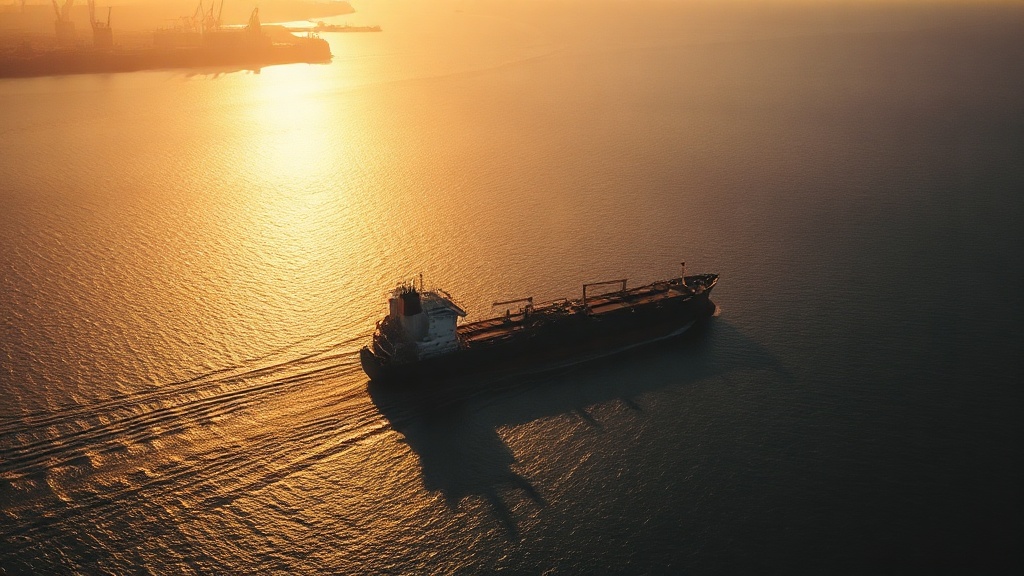
Iran wants tolls to keep Hormuz open. Markets are still guessing.
Bull Case
The transit fee proposal, however coercive, signals that Iran still wants the strait functionally open — a complete closure would devastate Iran's own remaining export revenues and regional allies who depend on Gulf shipping. As CNBC reported on June 8, 2026, peace negotiations are actively ongoing as the conflict approaches its 100th day, suggesting both sides retain economic incentives to avoid total escalation. Markets pricing in a negotiated off-ramp, even an ugly fee-based one, are not being naive — they're reading Iran's revealed preference for revenue over rupture.
Sources: CNBC, June 08, 2026, NDTV, June 08, 2026
Bear Case
The IRGC's explicit threat on June 8, 2026 — that any further Israeli strikes on Iranian energy infrastructure will trigger retaliatory hits on regional energy assets — transforms the Hormuz situation from a pricing risk into a cascading infrastructure risk. Israel struck Iran's Karun petrochemical plant in Khuzestan, and the IRGC responded within the hour by hitting facilities in Haifa, per Euronews. That hour-long retaliation window means the margin for miscalculation is razor thin, and a single exchange could shutter the 20% of global oil supply that transits Hormuz before any diplomatic circuit breaker can activate.
Sources: Euronews, June 08, 2026, NYT, June 08, 2026
Global Markets
Oil prices surged and stocks fell on June 8, 2026 after Iran and Israel exchanged strikes, per the NYT, but the 'transit fee' framework introduced by Iran's envoy to Moscow adds a structural layer markets haven't fully modeled: not a temporary spike risk, but a permanent tariff regime on roughly one-fifth of global crude flows. NDTV reported that the US-Israeli war on Iran has already largely cut oil flows via the strait, meaning the baseline is already disrupted — the fee is Iran's attempt to monetize a chokepoint it effectively controls. Retail investors watching spot crude are missing the longer-term shipping insurance, tanker routing, and LNG contract repricing now underway.
Sources: NDTV, June 08, 2026, NYT, June 08, 2026, Euronews, June 08, 2026
What Your Feed Is Hiding
Every headline focuses on the threat of closure, but Iran's transit fee proposal is structurally more dangerous than a temporary blockade — and less discussed. A blockade ends with a negotiation; a fee regime, once normalized, becomes a permanent tax on the global economy with no clear legal mechanism to challenge it. The NDTV report from June 8, 2026 notes that the US-Israeli war has already largely cut oil flows via the strait, meaning the market has already absorbed a de facto partial closure — yet prices haven't fully reflected a world where the reopening comes with an indefinite surcharge. Bulls celebrating the 'off-ramp' of negotiations and bears warning of kinetic escalation are both missing the third scenario: Iran gets neither war nor peace, but a permanent tolling authority over 20% of global crude, and the world's shipping industry quietly pays it. That outcome requires no ceasefire, no military victory, and no diplomatic breakthrough — it just requires the status quo to harden.
Key data: NDTV (June 08, 2026): 'The US-Israeli war on Iran has largely cut oil flows via the strait' — the baseline disruption is already priced in; the permanent fee regime is not.
Where They Actually Agree
Bulls, bears, and global market analysts all implicitly agree on the same foundational fact: the Strait of Hormuz is already functionally disrupted, and the conflict is real, not rhetorical. No serious voice on any side is arguing that oil flows through the strait are operating normally. The debate is entirely about duration and resolution mechanism — not whether there is a crisis.
Community Pulse
Is Iran's transit fee proposal a serious long-term policy rather than a short-term negotiating tactic?
AI-generated analysis based on published sources. TheOtherFeed does not take political positions.