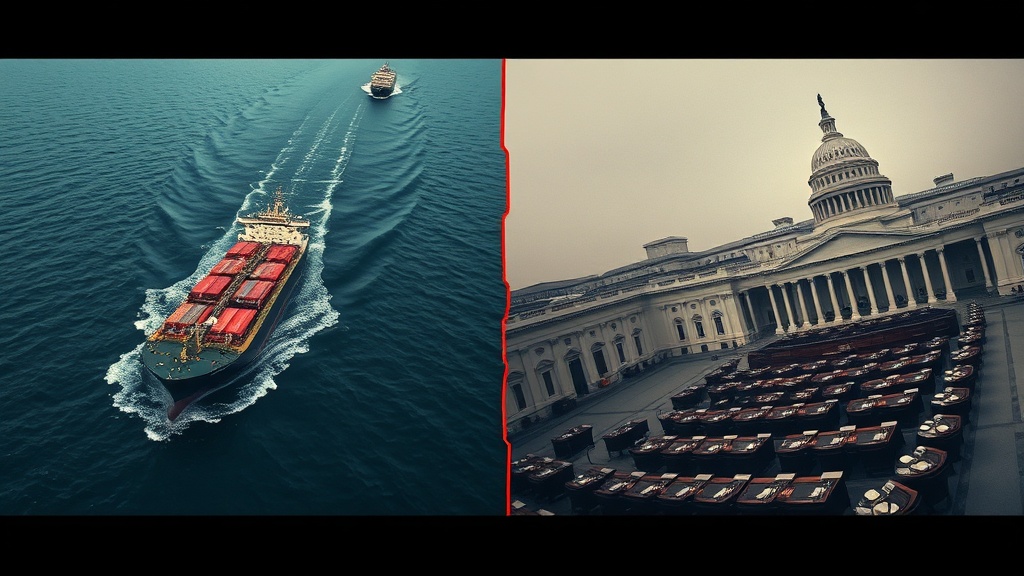
Iran fires on ship hours after Trump extends ceasefire
Left Feed Reality
Iran's attack represents a predictable escalation following Trump's unilateral ceasefire extension without proper diplomatic coordination. The Financial Times reports Tehran's UN ambassador accused the US of 'wrongful acts' in breach of ceasefire terms, suggesting the container ship attack was retaliation for American violations Iran claims occurred first. This follows a pattern of Trump making grand announcements while ignoring the complex diplomatic groundwork needed to make ceasefires actually hold.
Sources: Financial Times (April 22, 2026)
Right Feed Reality
Iran's unprovoked attack on a civilian container ship just hours after Trump's good-faith ceasefire extension proves the regime cannot be trusted and only understands strength. NDTV reports the Iranian Revolutionary Guard gunboat fired without even attempting to hail the vessel first, demonstrating the reckless aggression that makes diplomatic solutions impossible. This attack validates Trump's maximum pressure approach and shows why Iran must face consequences for rejecting peaceful overtures.
Sources: NDTV (April 22, 2026)
Global POV
The timing reveals both sides using maritime incidents to test boundaries while maintaining plausible deniability about ceasefire violations. The Hindu reports no casualties or environmental damage from the attack, suggesting Iran calibrated the response to send a message without triggering major retaliation. International observers see this as Iran probing whether Trump's ceasefire extension comes with enforcement mechanisms, while Trump tests whether his announcements alone can constrain Iranian behavior in the Strait of Hormuz.
Sources: The Hindu (April 22, 2026), Middle East Eye (April 22, 2026)
What Your Feed Is Hiding
Neither Trump's ceasefire announcement nor Iran's ship attack mentioned the specific terms of the ceasefire they're supposedly operating under, suggesting both sides are performing for domestic audiences rather than following any actual diplomatic framework. The UK Maritime Trade Operations centre's matter-of-fact reporting of 'no casualties, no environmental impact' indicates maritime incidents like this have become so routine that international monitors treat them as choreographed theater rather than genuine military escalation. The real story isn't violation or retaliation — it's two governments using carefully calibrated maritime provocations to signal strength while avoiding the actual diplomacy that would make a ceasefire meaningful.
Key data: UKMTO's clinical assessment of 'no casualties, no environmental impact' from what both sides frame as a major escalation
Where They Actually Agree
All perspectives acknowledge the timing was deliberate and significant — Iran didn't randomly choose to fire on a ship hours after Trump's announcement. Both left and right feeds also agree this incident will be used to justify their preferred Iran policy approaches, whether diplomatic engagement or maximum pressure, rather than examined as evidence of what's actually working or failing in the Strait of Hormuz.
Community Pulse
Should the US respond militarily to Iran's attack on the container ship?
AI-generated analysis based on published sources. TheOtherFeed does not take political positions.