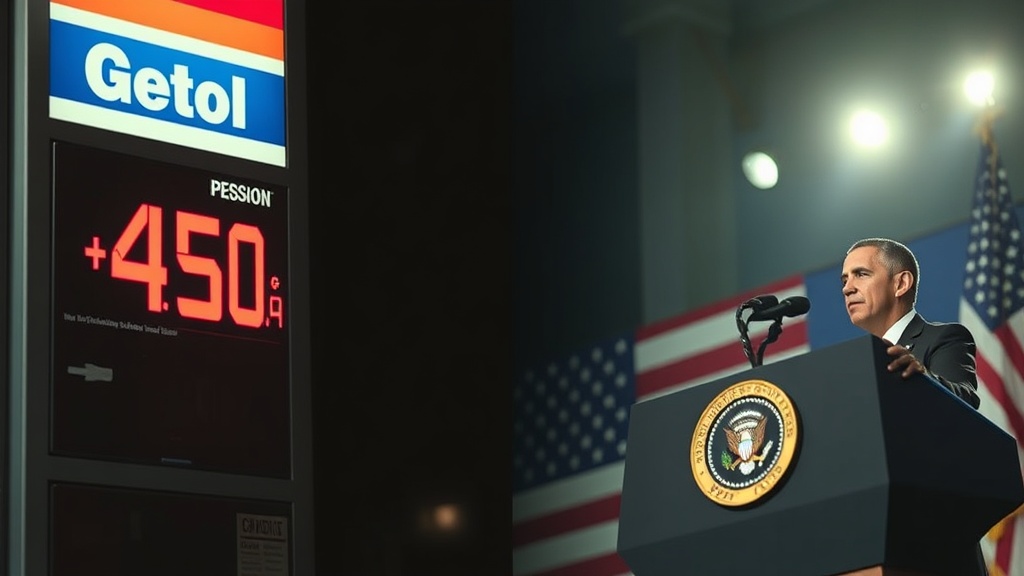
The $4 gas price fact neither party wants discussed
Bull Case
Energy markets are responding rationally to supply disruptions, particularly Iran's restrictions on Strait of Hormuz shipping that accounts for 20% of global oil transit. Energy Secretary Wright's honesty about $4 gas lasting into 2027 reflects responsible expectations management rather than policy failure, giving markets time to adjust and invest in increased domestic production.
Sources: The Hill (April 19, 2026)
Bear Case
The Trump administration's energy promises are colliding with geopolitical reality, as Wright admits uncertainty about when Americans will see $3 gas again despite campaign pledges of energy dominance. The Guardian reports Wright saying 'I don't know' when pressed on timeline for relief, suggesting the administration lacks concrete plans to address the crisis that's doubled gas costs from recent lows.
Sources: The Guardian US (April 19, 2026), Washington Examiner (April 19, 2026)
Global Markets
International energy traders are pricing in extended regional instability as Iran's shipping restrictions create sustained supply chain bottlenecks. CNBC's reporting shows the current spike represents more than a temporary geopolitical premium, with structural supply-demand imbalances that won't resolve quickly even if Strait of Hormuz tensions ease.
Sources: CNBC (April 19, 2026)
What Your Feed Is Hiding
None of the partisan coverage mentions that $4 gas represents roughly 2.8% of median household income compared to 1.9% in 2019, meaning gas prices haven't just doubled—they've consumed 47% more of family budgets. This income-adjusted impact explains why the political stakes are so high, but neither side wants to frame it as a structural affordability crisis that predates current geopolitical tensions. The percentage-of-income metric reveals this isn't just about energy policy—it's about wage stagnation colliding with essential costs.
Key data: Gas costs now consume 2.8% of median household income versus 1.9% in 2019
Where They Actually Agree
Both sides agree that current gas prices above $4 per gallon represent a significant burden on American families and that the timeline for meaningful relief extends well beyond this year. Wright's acknowledgment that prices 'might not happen until next year' reflects a bipartisan reality that neither party's immediate policy tools can quickly reverse global supply chain disruptions.
Community Pulse
Should the federal government release strategic petroleum reserves to lower gas prices immediately?
AI-generated analysis based on published sources. TheOtherFeed does not take political positions.